The Land
Primary cloud forest. Never cleared. No signal.
Cloud forest in the mountains of Costa Rica, near Braulio Carrillo National Park. A year-round river to the west. Around 1,600m — similar to Monteverde but without the tourists.
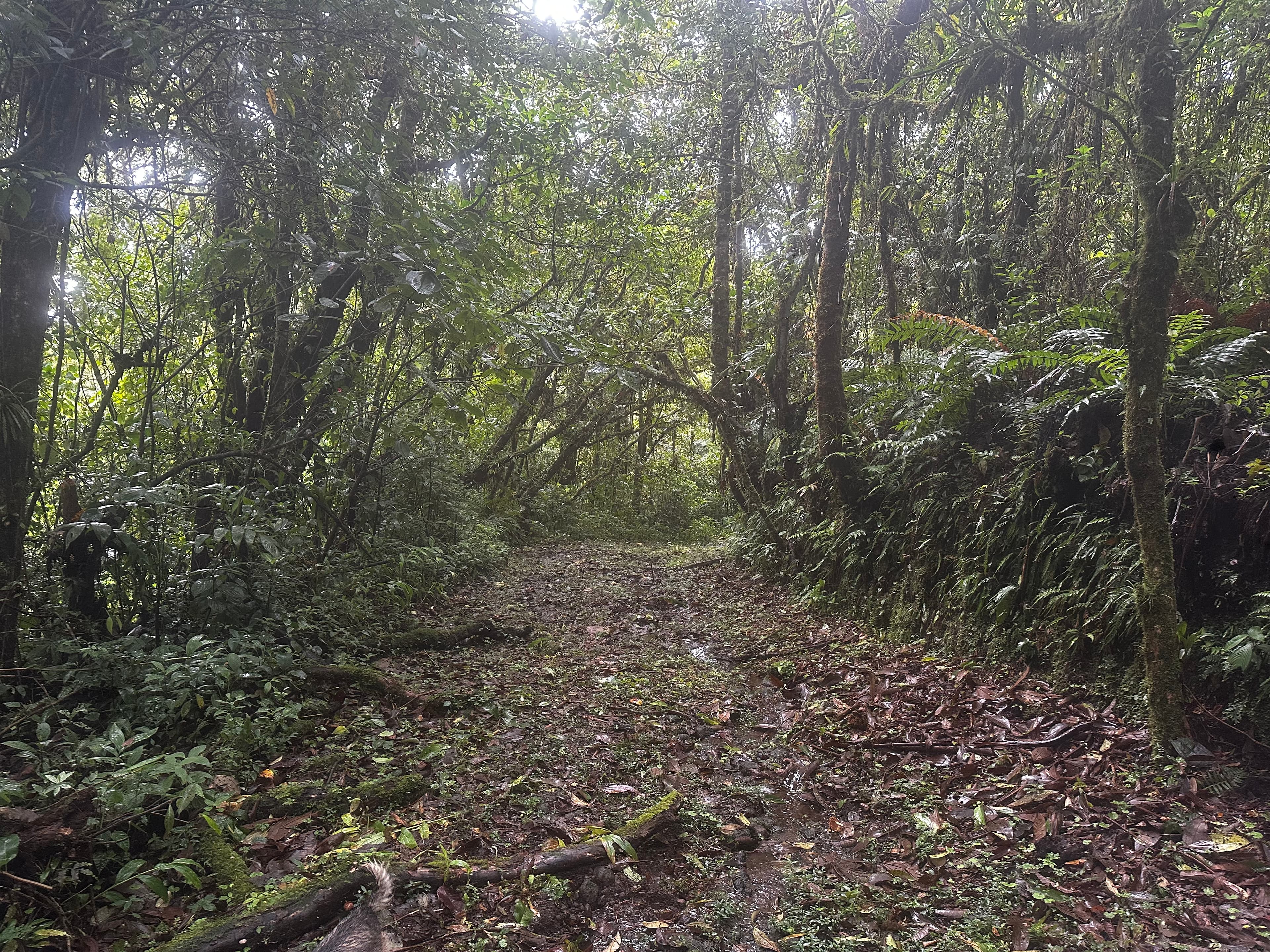
The bosque trail. October 2024.
The Two Zones
The property has two distinct zones. The bosque — primary cloud forest, intact canopy, undisturbed soil, unbroken habitat. Never logged, never cleared. The potrero — a hilly clearing where wild blackberries are already growing, confirming the microclimate. Domestic animals stay in the potrero. The bosque stays wild.
A year-round river runs along the property boundary. Glass frogs live on the river — translucent, visible organs, a clean-water indicator that does not survive in degraded habitat. The water is cold and clear. There is no signal on the property.
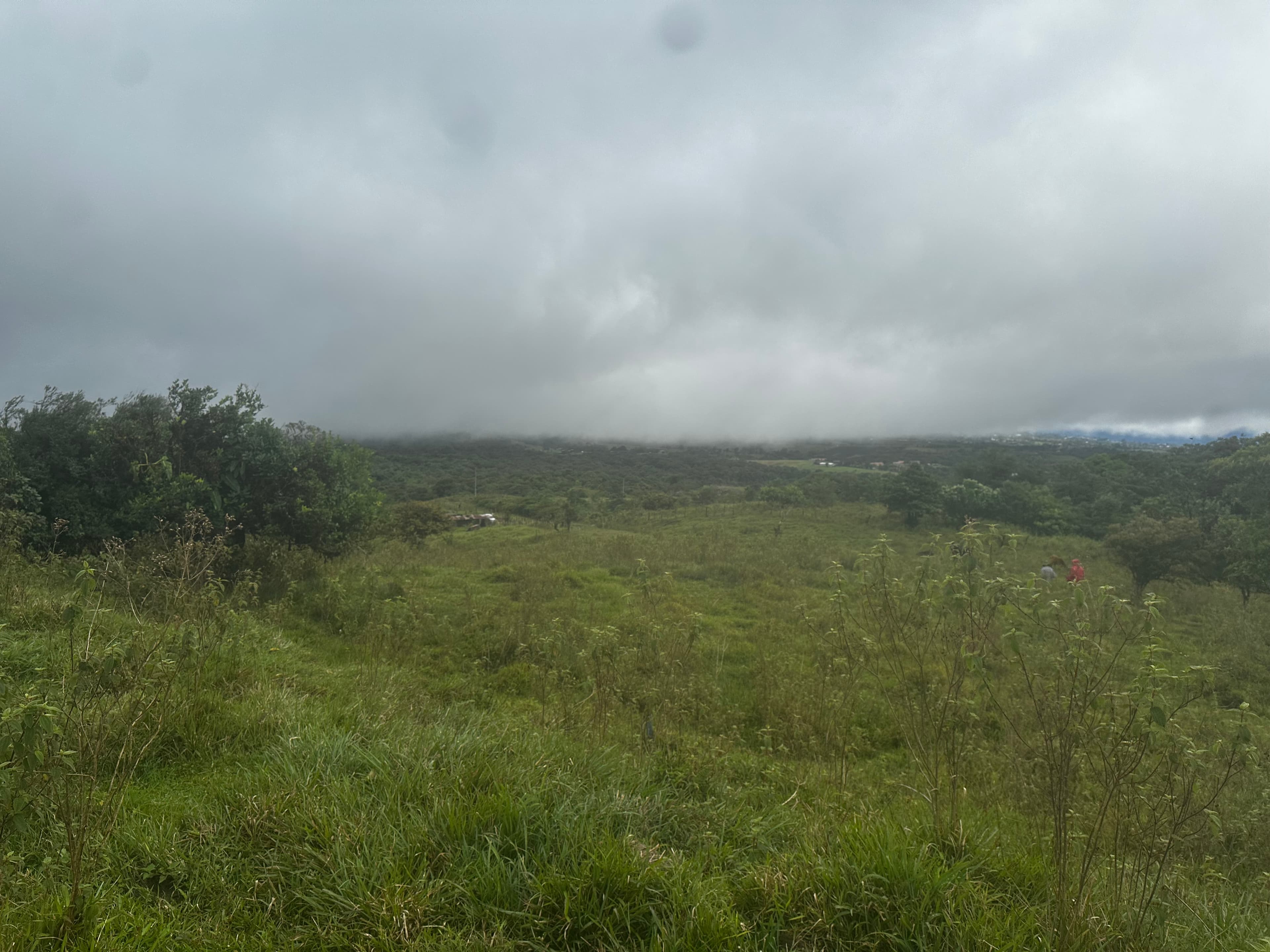
The potrero — hilly clearing at the entrance. The bosque begins at the tree line.
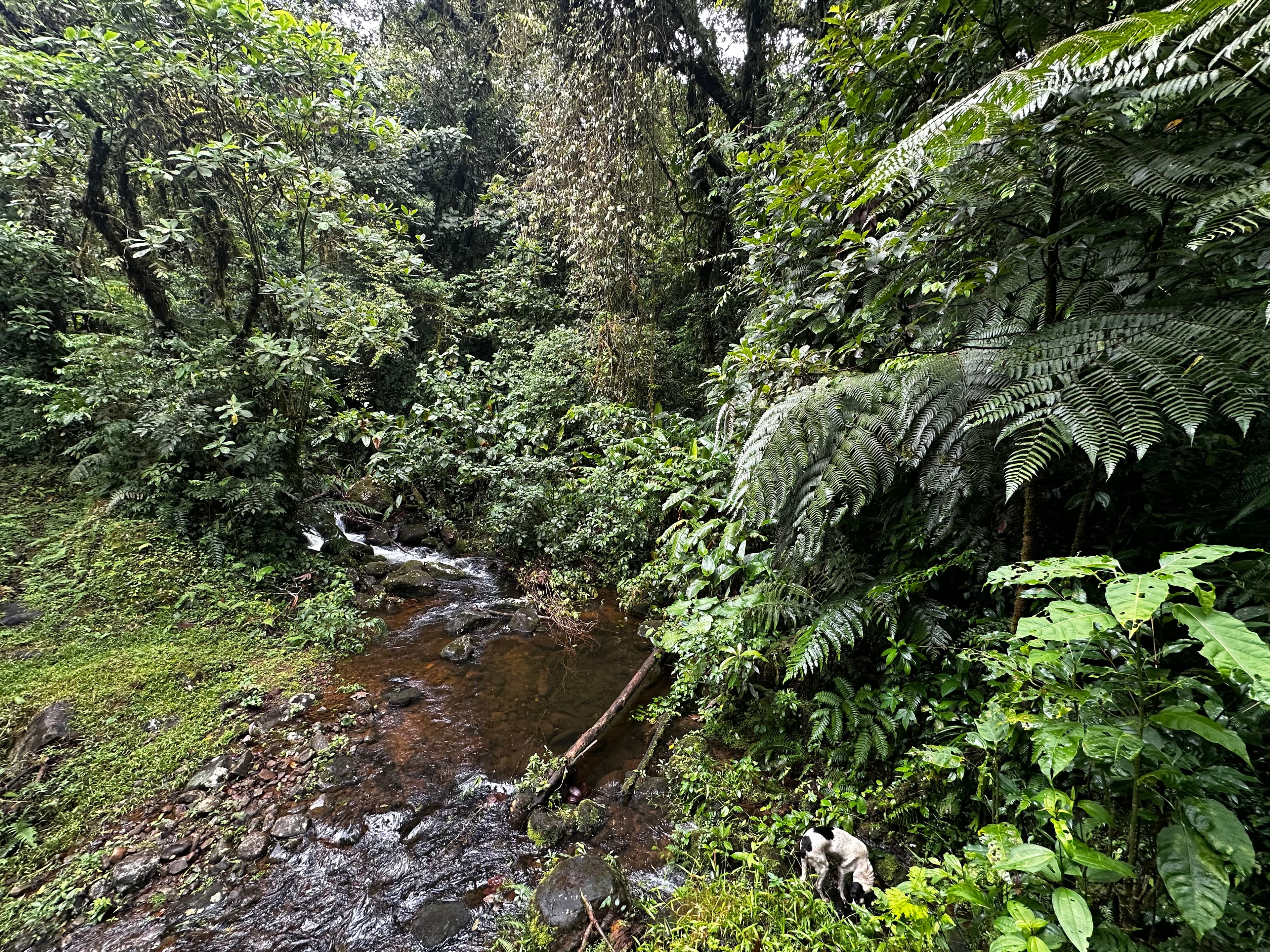
The river. Glass frogs live here.
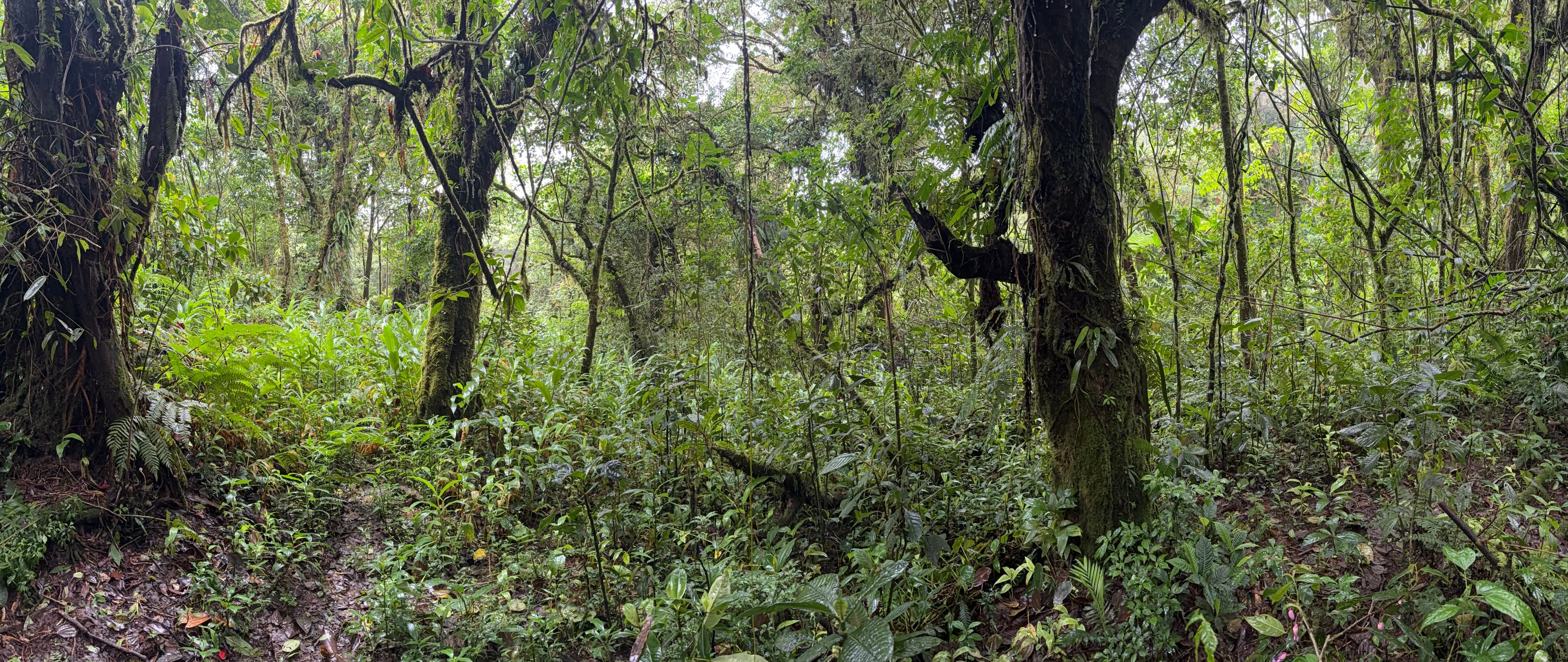
Inside the bosque. May 2026.
Photos taken on the land — October 2024 and May 2026
First Peoples
This is Huetar territory — specifically adjacent to the Toyopán chieftaincy. The Huetar people have lived in this region for thousands of years. We acknowledge that plainly and without romanticizing it. The land carries that history. We hold it with respect.
The Old Road
An old cobblestone road runs near the property — built in the 1880s, historically the only route between the Central Valley and the Caribbean coast. Four-wheel drive only. The cobblestones are still there.
In 1884, Bishop Bernardo Augusto Thiel was exiled from Costa Rica and walked this road. He documented the forest as he passed through — one of the earliest written records of what this land looked like. We walk the same road to reach this place.
The road draws people looking for the park. Most are turned back. The ones who keep going find primary forest, a family that knows it, and no tour group in sight.
The Caretakers
Macho lived in this area for over 50 years — more than 25 of them on this land under a stewardship arrangement, not a labor contract. He knew every trail, every spring, every tree. He built paths through forest that had no paths. He protected the land when it would have been easier and more profitable not to. The forest is intact today because of him.
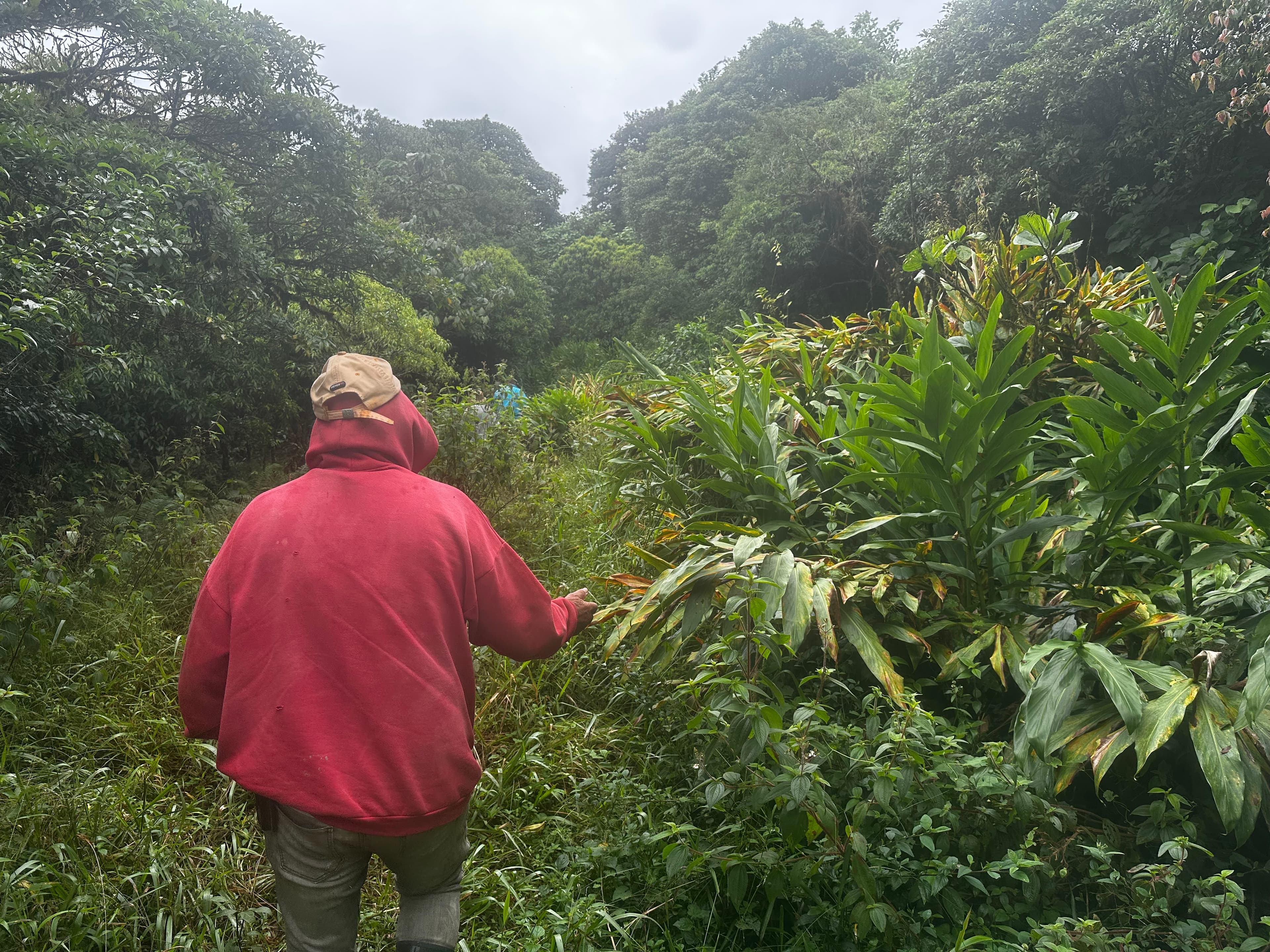
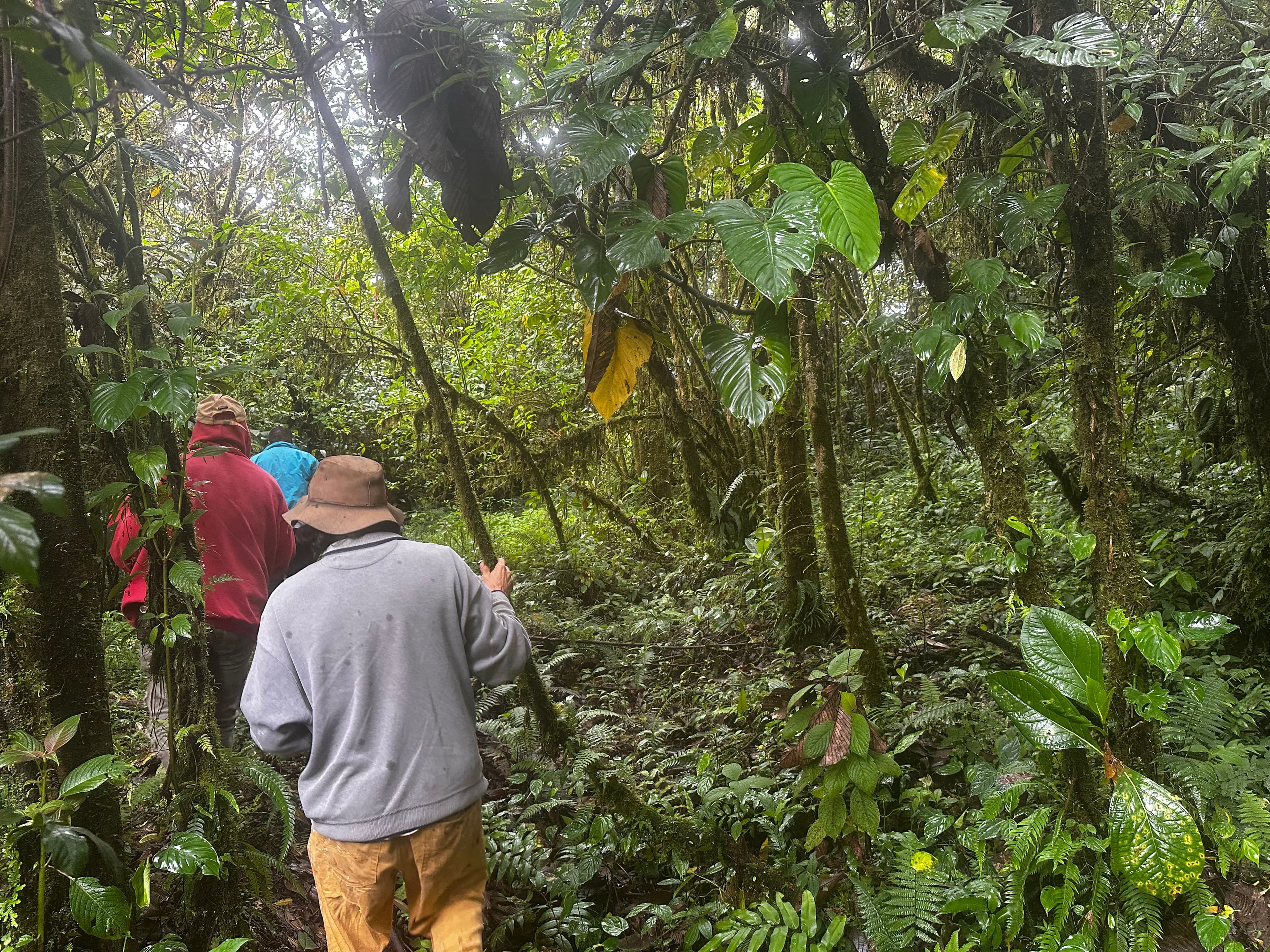
Walking the land with the caretaker. October 2024.
Age eventually forced him off the land he loved. His son now drives out on his days off to keep the work going. He carries his father's knowledge of this place. He is doing this because he wants to build something real — for his family and for the land his father gave his life to.
They are the reason the forest is what it is. This project exists to honor that — and to make it possible for Daniel to do this work full time, not just on borrowed hours.
The goal is not to employ him. It is to build something with him — a formal operating structure where his family has a real stake in what this land becomes, not just a wage for keeping it alive. That conversation is happening. The structure is being built. We are not there yet, but that is the direction and we are not moving away from it.
Wildlife
- TapirConfirmed on the property. Baird's tapir — the largest land mammal in Central America. Their presence means the habitat is intact and undisturbed.
- Resplendent QuetzalHabitat confirmed at elevation. One of the most sought birds in the Western Hemisphere. Found where old-growth forest meets the cloud line.
- Glass frogsOn the river. Translucent abdomens, visible organs. A clean-water indicator — they do not survive in degraded habitat.
- Jaguar corridorThe forest connects directly to Braulio Carrillo, which supports jaguar and puma. This land is part of that movement corridor. Protecting it keeps it open.
- Fer-de-lancePresent on the property. The primary snake safety concern. Wide cleared trails, closed footwear, no unguided night walking. The guide walks first.
The Northwest Corner
The highest point of the property borders Braulio Carrillo National Park. Dense cloud forest, permanent cloud cover. The most remote and biodiverse section of the land — and it has never been formally documented.
The trail work happening now is what makes it reachable. That's where we're going.
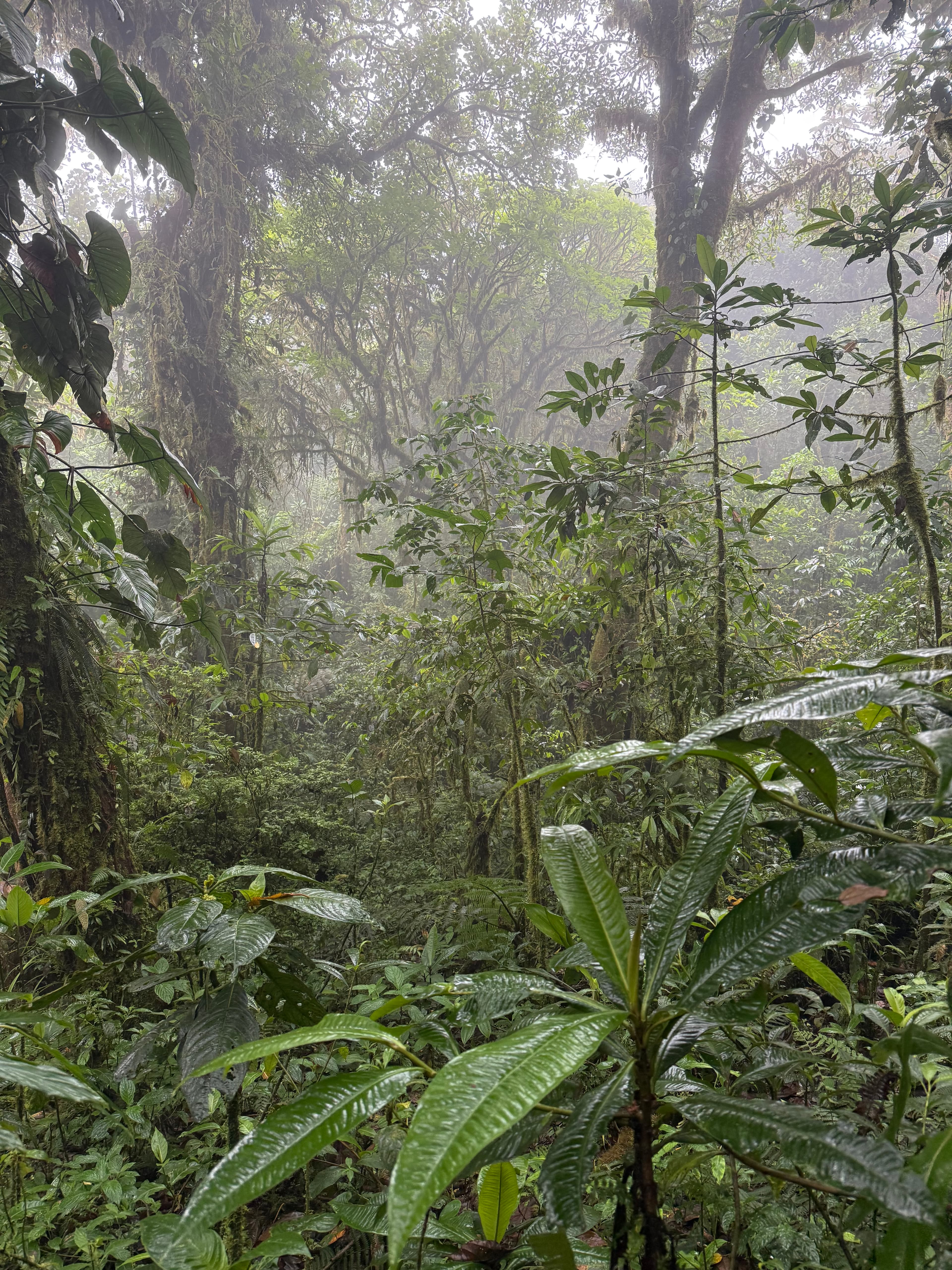
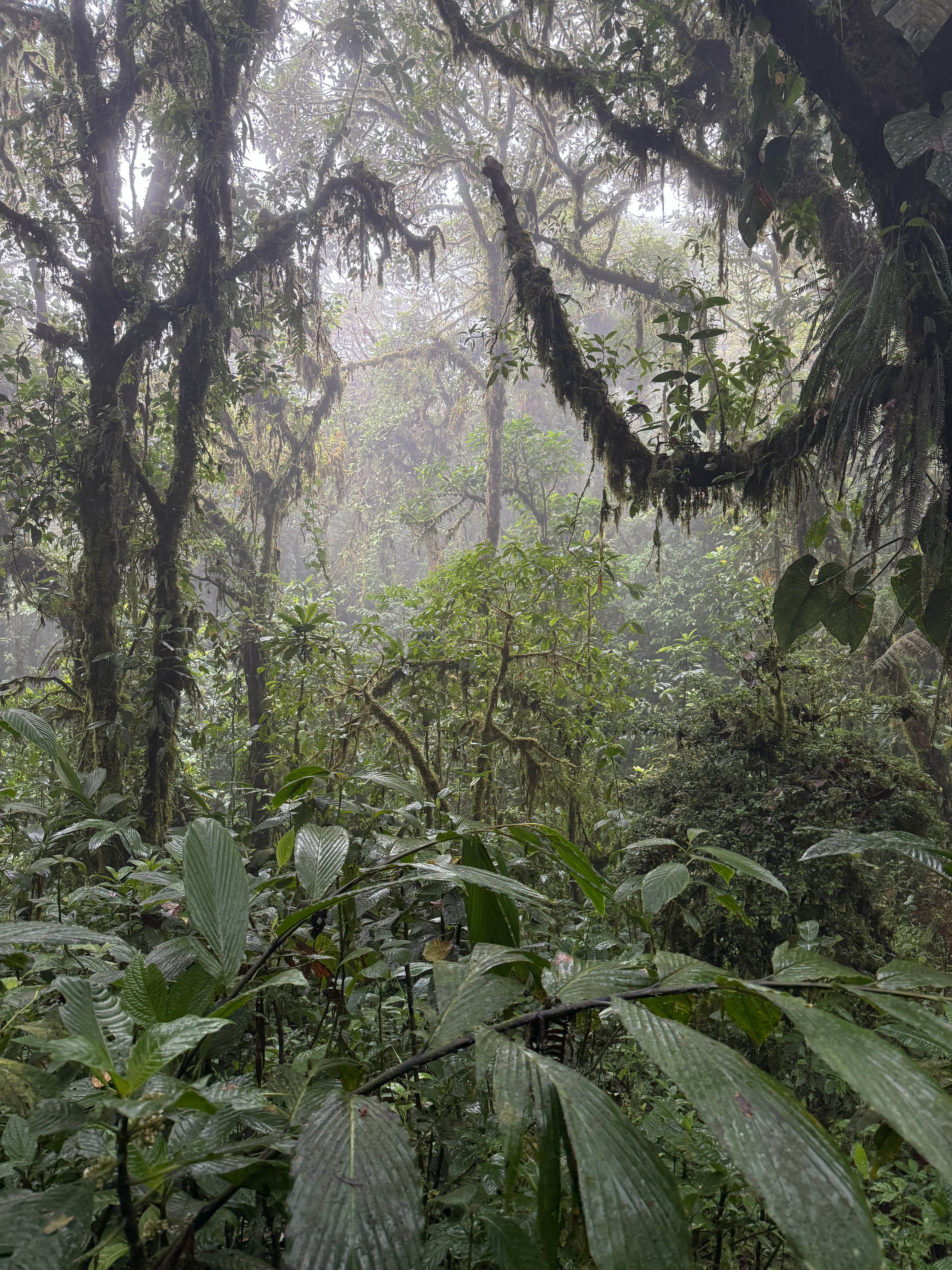
The bosque canopy. May 2026.